
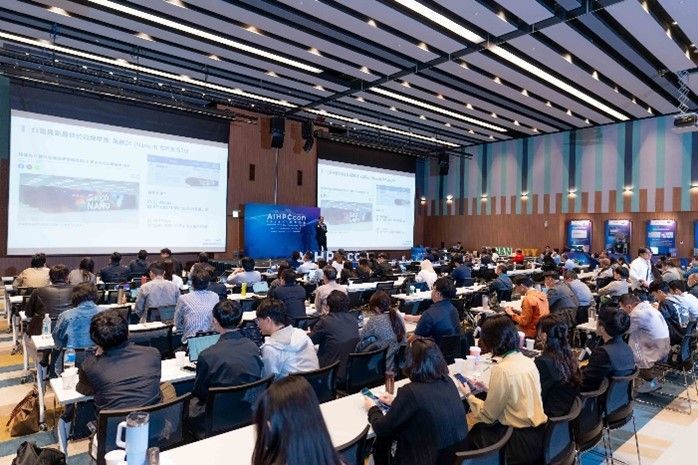
▲ The 2025 AIHPCcon was co-hosted by Taiwan Smart Cloud and the Digital Industry Administration of the Ministry of Digital Development in the morning, with "International Technology Day" as its main theme; the afternoon was co-hosted by Taiwan Smart Cloud and the Tainan City Government, with "AI Sustainable Cities" as its main theme. It attracted many industry elites from southern Taiwan to participate, and the venue was packed.
Cities worldwide are simultaneously facing the challenges of digital transformation and net-zero sustainability, with artificial intelligence becoming a key engine for governance innovation. The morning session of 2025 AIHPCcon, co-hosted by Taiwan AI Cloud and the Digital Industry Administration of the Ministry of Digital Development, focused on "International Technology Day," inviting AI experts to share insights on the latest AI computing power, modeling technologies, and innovative applications. The afternoon session, co-hosted by Taiwan AI Cloud and the Tainan City Government, focused on "AI-Sustainable Cities," highlighting computing infrastructure, local models, and cross-domain innovation to outline a blueprint for urban upgrading.
In his address, Wu Han-chang, General Manager of Taishin Cloud and Chairman of the AI Alliance, pointed out that the "Crystal 26" Nano4 supercomputer deployed in the Southern Taiwan Science Park ranks 29th in the global TOP500, establishing Tainan's core position in Taiwan's AI computing power landscape. Through its self-developed supercomputing deployment and cloud services, Taishin Cloud connects the industry and developer ecosystem and promotes the "New 4P Model," which includes four values: Project, Product, Profit, and Public. This model combines computing power, trustworthy AI models, and cross-domain innovation methodologies to create a new generation of AI city ecosystem with flexible deployment and governance resilience.
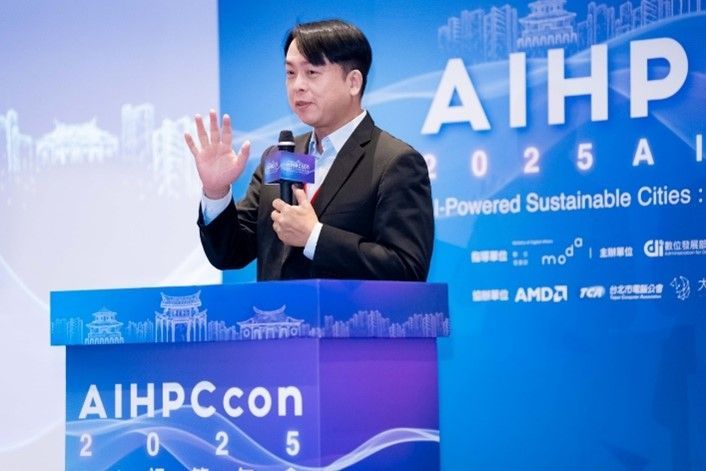 ▲ Wu Hanzhang, General Manager of Taizhi Cloud and President of the AI Alliance
Policy and industry drive urban competitiveness through AI computing power
In terms of policy, during the morning session, Tung Ming-hui, Chief Secretary of the Digital Industry Agency of the Ministry of Digital Development, pointed out that the government is using the "Ten New AI Infrastructure Initiatives" as a framework to strengthen Taiwan's AI competitiveness through five levers: computing power, funding, data, talent, and marketing. During the afternoon session, Su Chen-kang, Executive Vice Chairman of the National Science Council, stated that the "Greater Southern Silicon Valley Project" is accelerating the development of the AI semiconductor ecosystem by simultaneously building computing power, cultivating talent, and establishing blockchain infrastructure, and promoting the widespread adoption of computing power through the AI RAP generative AI application development platform.
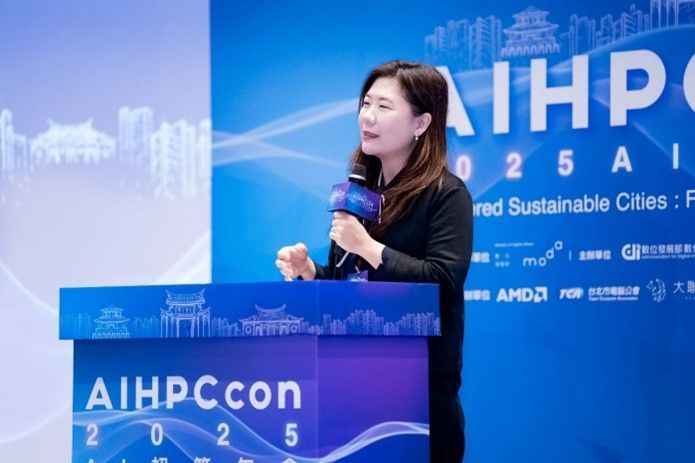 ▲ Tong Minghui, Chief Secretary of the Digital Industry Agency, Ministry of Digital Development
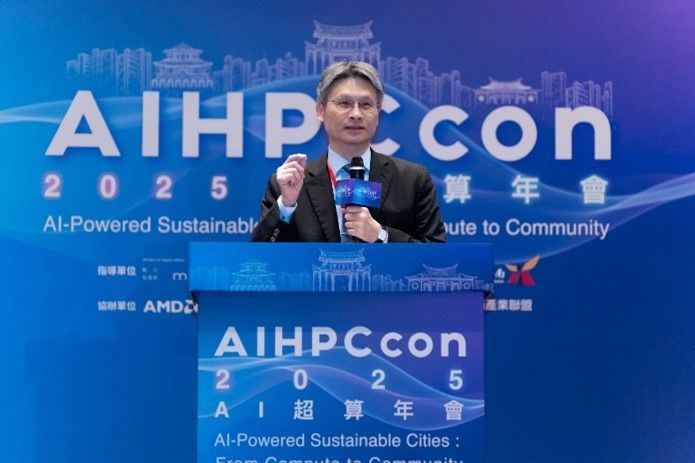 ▲ Su Zhengang, Executive Vice Chairman of the National Science Council
Tainan Mayor Huang Wei-che, focusing on practical needs, pointed out that the surge in demand for disaster damage reporting and the 1999 service hotline during peak hours puts pressure on the administrative system. He suggested that AI intervention could improve administrative efficiency, service quality, and municipal resilience. ASUS Co-CEO and Chairman of the Taiwan Smart City Industry Alliance, Hu Shu-bin, proposed a "Three-Tier AI City Model," encompassing computing power platforms, municipal services, and industrial upgrading, aiming to help Tainan develop into a replicable and exportable model city.
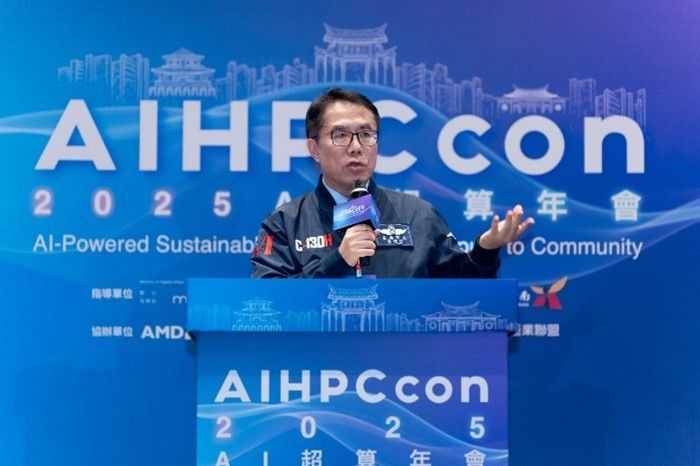 ▲ Tainan Mayor Huang Wei-che
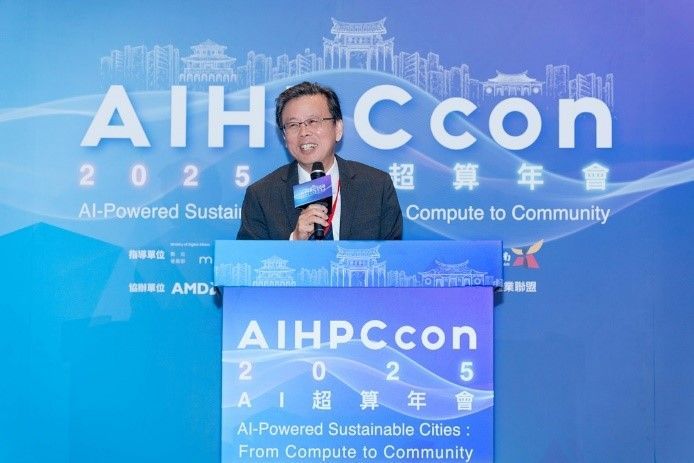 ▲ ASUS Co-CEO and Chairman of the Taiwan Smart City Industry Alliance, Hu Shubin
Co-evolution of intelligent cloud training and edge inference in the field of ground model-driven architecture
Lee Li-kuo, Chief Strategy Officer of Taiwan AI Labs, provided an in-depth analysis of the AI industry's momentum and the deployment of its self-developed computing power. He pointed out that Taiwan AI Labs has participated in the delivery of 6 out of 10 TOP500 supercomputers in Taiwan, with "Crystal 26" ranking 73rd on the Green500 list, demonstrating both performance and sustainability. Taiwan AI Labs has also established the only enterprise-level model service team in Taiwan, launching the Formosa Large Model (FFM), which deeply understands the Traditional Chinese language context. This model can be quickly fine-tuned and validated across industry sectors, accelerating the implementation of Domain AI. Lee Li-kuo emphasized that Taiwan AI Labs, with its efficient and low-carbon computing architecture, reliable local models, and cross-domain innovative synergy, lays the foundation for cities to move towards digitalization and sustainable upgrades.
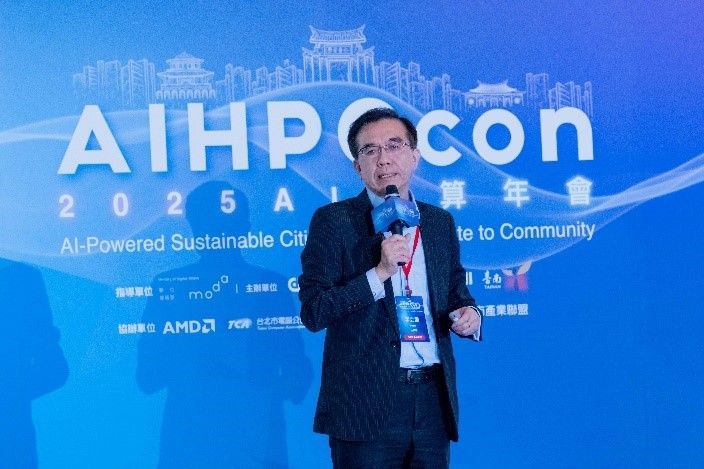 ▲ Lee Li-kuo, Chief Strategy Officer of Taiwan Smart Cloud
AMD Senior Technical Advisor Chang Ou-Yu-Hao pointed out that AI computing power is undergoing a paradigm shift, with the industry focus moving from pre-training to a balance between post-training and inference. As privacy and data security demands increase, AI workloads are gradually shifting to endpoints, making the NPU the core of AI PCs, offering significantly better energy efficiency than general-purpose architectures. Building on this, the AMD Ryzen AI Max series supports up to 96GB of dedicated GPU memory, enabling single-machine operation of billions of models, demonstrating its end-to-end computing power advantage.
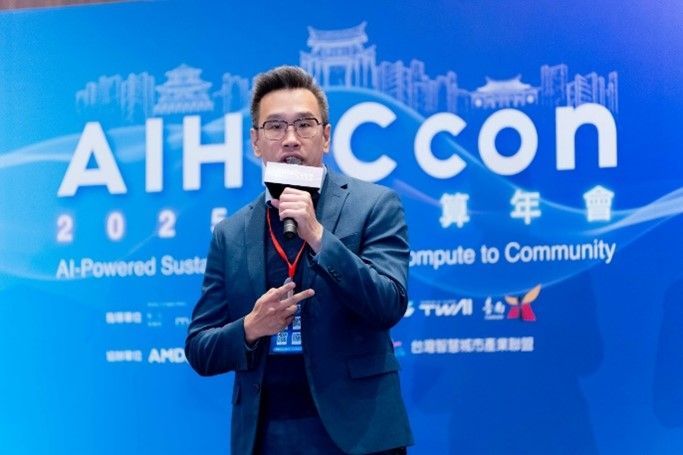 ▲ Zhang Ouyouhao, Senior Technical Advisor at AMD
Lin Tsung-liang, ASUS Global Vice President and ASUS Mobility General Manager, focused on smart transportation applications, pointing out that Tainan City has built the nation's first "Transportation Information Data Platform," which combines an AI perception platform to manage 194 intersections with an image recognition rate of 98%, improving traffic flow to 95%; and has deployed more than 4,000 smart parking pillars, making the rate of smart roadside parking spaces the highest in Taiwan.
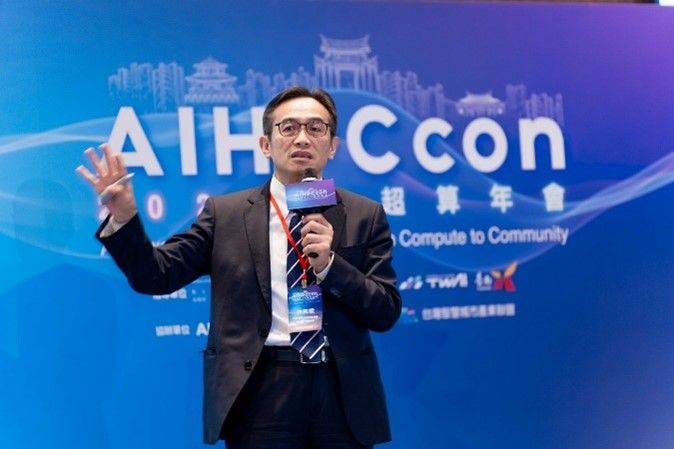 ▲ Lin Zongliang, Global Vice President of ASUS and General Manager of ASUS Smart Mobility
In his keynote speech, Wu Hanzhang further analyzed the evolution of smart cities, from Smart City 1.0 cloud computing, 2.0 IoT, and 3.0 image AI, to the 4.0 "Sovereign AI City" era. He pointed out that Taiwan Smart Cloud possesses full-stack capabilities for comprehensive planning, efficient construction, and continuous maintenance, enabling it to tailor-make sovereign AI city brains for central and local governments. With its independent computing power and reliable models, it promotes a cyclical innovation between infrastructure construction, model production, and application implementation, helping cities achieve leadership in smart governance and sustainable operation.
Tainan Deputy Mayor Chao Ching-hui proposed the "Tainan Model," which uses citizens' needs to drive urban governance and industrial innovation. It constructs three pillars: data sovereignty, computing power autonomy, and platform controllability, and promotes the AI transformation of various industries by following the strategy of "expanding computing power, linking fields, attracting talent, and developing applications."
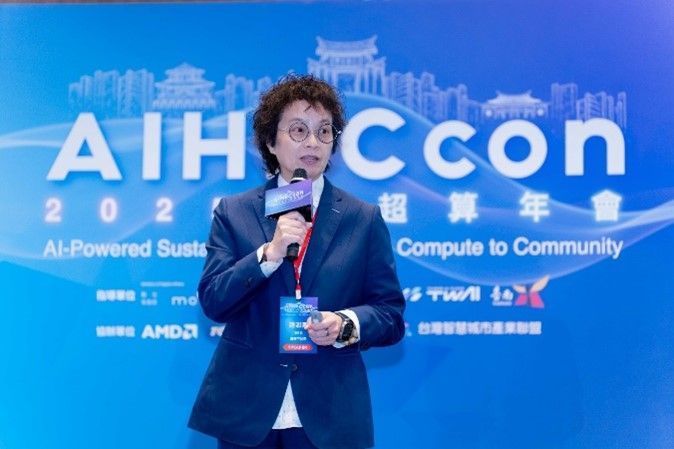 ▲ Tainan Deputy Mayor Chao Ching-hui
Lin Chien-cheng, Senior Vice President of Commercial Business at AMD Taiwan, pointed out that the core of AI Everywhere lies in heterogeneous computing, which requires collaboration between CPUs, GPUs, and NPUs depending on edge, enterprise, and cloud scenarios. Among them, AMD EPYC CPUs are responsible for data preprocessing and loading, while the AMD Instinct MI350 series, with its high memory capacity and performance, helps enterprises reduce overall costs in inference scenarios.
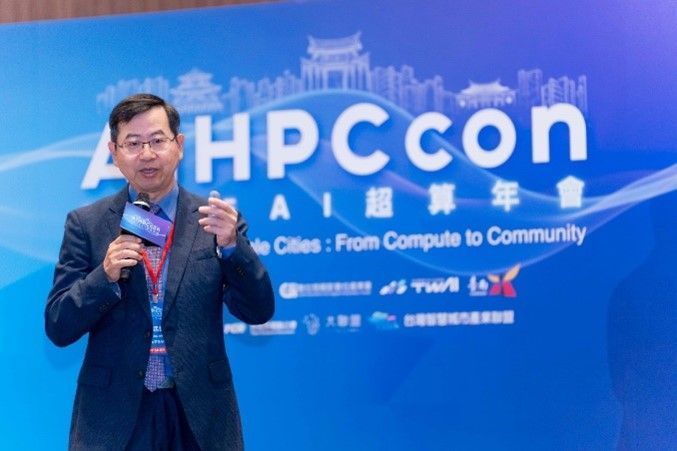 ▲ Lin Jiancheng, Senior Vice President of Commercial Business Division, AMD Taiwan
Public-private partnerships are driving industrial applications from widespread computing power adoption to in-depth vertical integration.
The closing forum, "AI City: Building a City-Level AI Innovation Ecosystem," was moderated by Huang Yiping, Vice General Manager of DIGITIMES, who engaged in in-depth discussions with Peter Wu, Zhao Qinghui, and Lin Jiancheng. Huang Yiping pointed out that AI has evolved from text-based to multimodal and agentic AI, leading urban governance into a new stage of comprehensive empowerment.
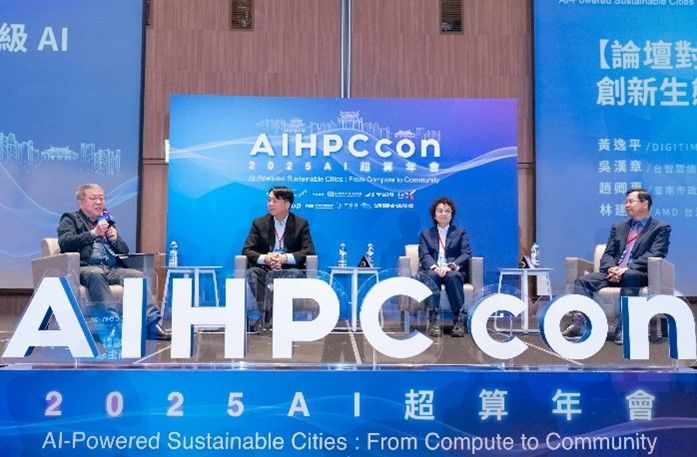 ▲ Huang Yiping, Deputy General Manager of DIGITIMES, hosted the final forum, "AI City: Building a City-Level AI Innovation Ecosystem," and engaged in in-depth exchanges with Wu Hanzhang, Zhao Qinghui, and Lin Jiancheng, leading urban governance into a new stage of comprehensive empowerment.
Peter Wu explained Taiwan AI Cloud's dual-core strategy: First, to promote the popularization of AI computing power, enabling domain experts to quickly develop diverse applications through No-Code/Low-Code tools, thereby popularizing AI knowledge and accelerating industrial transformation; second, to establish AI operation security standards, covering intelligent workload allocation, flexible computing power expansion, and model trustworthiness, creating a highly efficient and reliable AI service system. He emphasized that these two strategies complement each other, enabling Taiwan AI Cloud to play a key role in computing power supply, model services, and ecosystem integration, not only providing the technological foundation but also assisting industries and governments in establishing a complete path from digital transformation to net-zero sustainability through cross-domain innovation.
Zhao Qinghui added that AI-driven smart transportation has substantially improved the citizen experience, shortened parking space search time, and cumulatively reduced carbon emissions by 993 metric tons. The city government has also improved talent support in education, housing, and entrepreneurship through K12 Shalun International High School and the Winning Land Innovation Incubation Base. Lin Jiancheng pointed out that AI City will move towards a distributed computing architecture: the city government will build high-performance GPU servers; departments and bureaus will introduce Edge Servers and Edge Devices; and grassroots communities will introduce AI PCs to balance data sensitivity, reduce latency, improve energy efficiency, and promote governance participation.
Huang Yiping concluded that Taiwan can serve as a pioneer in AI City, exporting its successful experience to the adoption market and focusing on vertical AI, deepening its application in areas of expertise to create long-term benefits.
This annual meeting, through cross-sector dialogue between industry and government, outlined a pragmatic path to AI City. Tainan Cloud, as a core driver, combined its independent computing power, local models, and cross-domain innovation to assist Tainan in creating a "demand-driven supply" model. From computing power foundations and model applications to industrial transformation, Tainan showcased its urban vision of moving from Compute to Community. Simultaneously, Tainan Cloud, with its computing power and model services, led smart governance and sustainable development, establishing Taiwan's position in the global AI competition and providing an exportable model.
[Source:]DIGITIMES】