
While global open-source models are powerful, they generally face the challenge that most Chinese materials come from simplified Chinese, resulting in deficiencies in understanding traditional Chinese, social context, and local sensitivity.
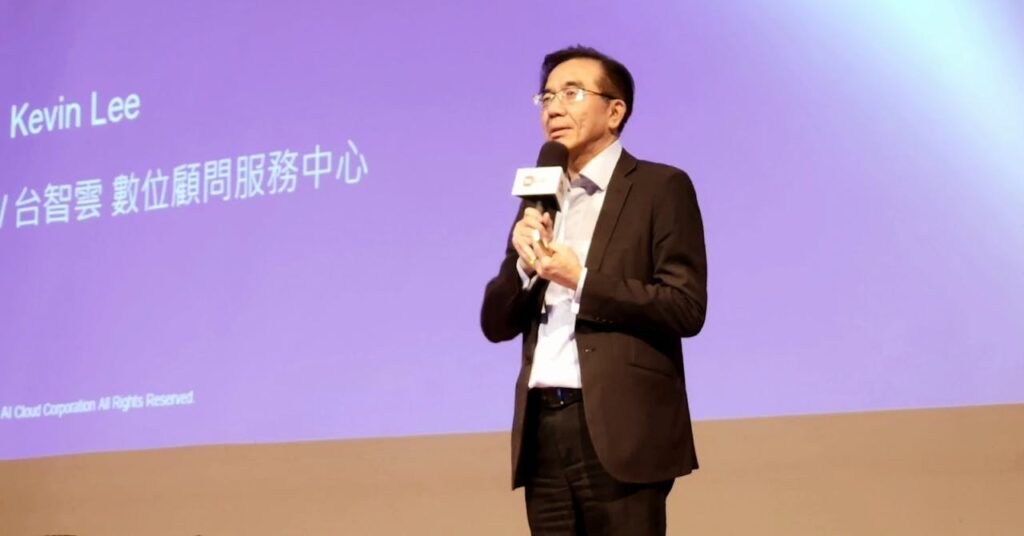
Amid the global AI wave, Taiwan's AI development direction has attracted much attention. Lee Li-kuo, Chief Strategy Officer of Taiwan AI Labs, delivered a keynote speech today (9th) at the 2025 INSIDE Future Day, titled "How to Build a 100% AI Agent Suitable for Taiwan." Lee emphasized that Taiwan should not only focus on its hardware manufacturing advantages in the AI field, but must also comprehensively build a "sovereign AI" ecosystem belonging to Taiwan, from underlying supercomputer computing power and core Traditional Chinese language models to task-oriented AI agent applications.
Li Liguo pointed out that AI applications have evolved from the simple "chatting" that emerged with ChatGPT at the end of 2022 to the current era of Agentic AI, which is more aggressive and task-oriented. To achieve this goal, strong and readily available domestic computing power resources are fundamental.
Taiwan's Computing Power Blueprint: Active Investment from the Government and the Private Sector
Taiwan's AI computing power development can be traced back to 2018 with the establishment of the first AI HPC (High-Performance Computing) supercomputer, "Taiwan Sugi-2," driven by government policy. Against this backdrop, Taiwan Abraham Cloud was established in March 2021, integrating technologies from ASUS and the National Center for Computing Technology, and taking over half of the "Taiwan Sugi-2's" production capacity, becoming one of the earliest companies in Taiwan to focus on GPU computing power as its core service.
Unlike traditional cloud computing giants (CSPs) like Amazon or Google, Taiwan Abraham Cloud positions itself as a "Next Generation Cloud Service Provider" (NEC), aiming to achieve "computing power equality"—making supercomputer resources no longer confined to academic institutions but readily available tools for industry. Currently, through the Software Computing Power Project of the Digital Industry Administration of the Ministry of Digital Development, this force has successfully assisted nearly 160 Taiwanese software companies in commercializing AI products, accelerating industry transformation.
Core of Local AI: Licensing and Deployment of the Formosa Large Model
However, computing power alone is not enough. Li Liguo emphasized that the core of achieving a 100% AI agent that meets local needs lies in the establishment of the model.
While global open-source models are powerful, they generally face the challenge that most Chinese materials come from simplified Chinese, resulting in deficiencies in understanding traditional Chinese, social context, and local sensitivity.
Based on this, Taizhiyun has developed the "Formosa Foundation Model", which starts with open source models (such as the BLOOM 176B system) and uses its supercomputer computing resources for subsequent fine-tuning.
The Formosa model focuses on optimizing Traditional Chinese text and has been specifically tuned for political correctness and local relevance, such as ensuring that it can correctly answer national questions related to the Republic of China.
The Formosa model, encompassing sizes from 8B and 13B to 70B, demonstrates Taiwan's ability to modify model weights and conduct effective training. However, Li Liguo emphasized that industrial applications should not blindly pursue large models, but rather choose based on task efficiency and cost. In scenarios such as finance, healthcare, or manufacturing production lines, smaller models (e.g., 7B or 8B) are often more accurate and efficient in performing specific tasks, avoiding the waste of computing power caused by large models "thinking too much."
AI Agents are key to transforming model intelligence into actual enterprise output. Li Liguo views their implementation as a complete process: from demand consulting, model training, Agent execution to final KPI verification, none of which can be omitted.
From achieving self-sufficiency in underlying computing power to deeply cultivating traditional Chinese models locally, Taiwan is attempting to move beyond the old path of merely outsourcing hardware manufacturing. Only by transforming computing power into intellectual power, and then translating it into actual productivity through AI agents, can Taiwanese industries truly gain their own voice and competitive advantage in this AI race.
Further Reading
Original report|INSIDE: From Supercomputers to AI Agents: Taiwan Smart Cloud Discusses Taiwan's Experience in Developing Local Models
Learn more | Taizhi CloudAI model outsourcing service