
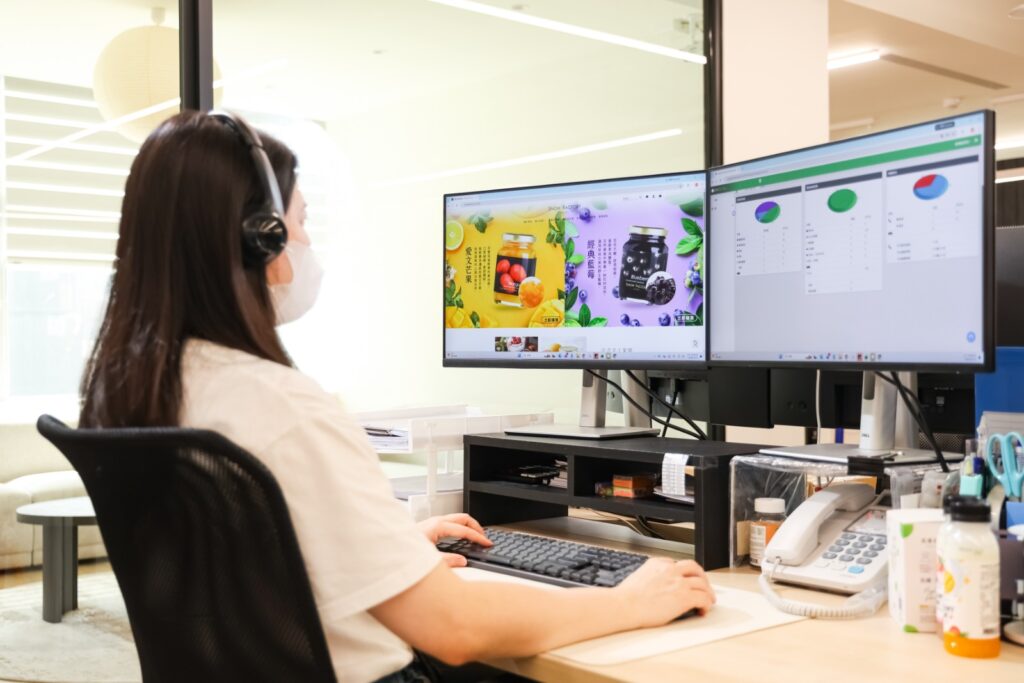
With support from the New Taipei Industrial AI Transformation Program, Xuefang connected with a service provider offering an open API architecture, enabling voice call records to be transmitted directly to its data backend for integrated customer service management.
Xuefang Enhances Customer Service Efficiency, While Yingli Accelerates Product Documentation!
As the wave of AI transformation continues to accelerate, many businesses are eager to adopt AI but struggle to find the right approach. To help enterprises embrace AI and enhance operational efficiency, the New Taipei City Government Department of Economic Development partnered with Taiwan Smart Cloud Services Co., Ltd. in 2026 to launch the pioneering New Taipei Industrial AI Transformation Program. The initiative carefully selects qualified AI service providers and offers one-on-one matchmaking to connect local businesses with the most suitable technology solutions, ensuring that AI can be effectively integrated into their day-to-day operations.
Among the first successful implementation cases are Xuefang, a natural yogurt brand that has rapidly gained recognition in recent years and now operates more than 60 stores across Taiwan, and Yingli Biochemical Technology, a company dedicated to incorporating environmentally friendly principles into its skincare products.
Breaking Down Data Silos: Expert Guidance from the Department of Economic Development Helps Xuefang Unify Customer Data
As the brand increases its customer interactions across online and offline channels, customer service staff sometimes have to deal with one-star Google reviews and malicious phone complaints, placing considerable pressure on frontline employees. Xuefang's Digital Consultant, Zhai Jun-gang, explained that the company initially wanted to introduce a call recording system. An opening notification could help deter malicious harassment and protect employees' legal rights, while the recordings could also serve as internal training materials. However, traditional off-the-shelf hardware systems are built on closed architectures, making it difficult to integrate them with the company's existing data systems, let alone incorporate AI.
The New Taipei Industrial AI Transformation Program goes beyond matching businesses with AI tools and providing financial subsidies. The Department of Economic Development also brings together a team of experts to provide hands-on guidance throughout the transformation process. The consultants quickly identified a key challenge at Xuefang: customer data from its website, group-buying channels, and physical stores had long been scattered across different departments. With the consultants' guidance, Xuefang used key identifiers such as phone numbers to standardize customer data across all channels, breaking down data silos and enabling seamless information sharing between departments.
Understanding Customer Sentiment and Automatically Routing Order Changes: Xuefang's Customer Service Team Cuts Work Hours by 30% and Moves Beyond Constant Crisis Management
Once the data flow is fully integrated, AI can truly unleash its potential. After adopting Yingnuo Technology's architecture, the system can instantly convert incoming voice messages into text and send them to the backend for sentiment analysis. Unlike early AI systems that could only rigidly compare keywords like "return" and "anger," the new system can comprehensively consider the context and flow of the conversation to accurately determine whether the customer's current emotion is positive, neutral, or negative, allowing customer service representatives to grasp the customer's psychological state before they even speak.
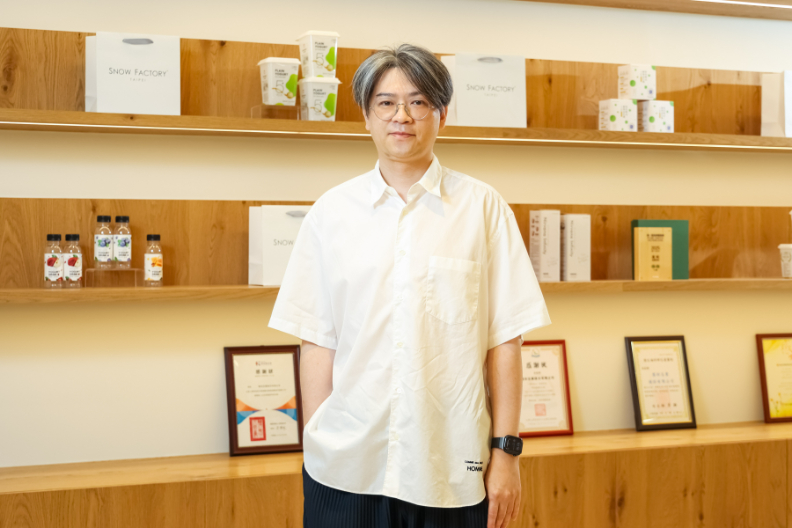
Xuefang's Digital Consultant, Zhai Jun-gang, observed that AI has made customer service operations much more seamless. With the support of technology, the customer service department has evolved into a more stable and supportive workplace, where tasks are easier to manage and team members can readily support one another.
Another major improvement is the implementation of intelligent call routing. According to Zhai Jun-gang, incoming calls were previously assigned at random. When new employees received calls involving complex customer requests, they often struggled to handle them and had to transfer the calls to senior colleagues, who would then need to start the process all over again. Now, as soon as a call comes in, the system automatically cross-references the customer's history and retrieves relevant customer tags. Straightforward requests, such as changing a delivery time, are routed to new employees as hands-on training opportunities, while challenging complaints and more complex cases are accurately assigned to experienced staff members best equipped to handle them.
In addition, the system can automatically route high volumes of repetitive order-change requests to dedicated order modification specialists directly through the voice channel, making the entire process faster and more efficient. Designed to ease the workload of frontline staff, this core feature delivered results as early as the month following implementation, reducing the customer service team's average working hours by more than 30% and significantly minimizing unnecessary process inefficiencies.
Keeping Complex Regulations from Slowing Down Shipments: Cosmetics Manufacturer Yingli Turns to AI to Ensure Compliance Across Its Entire Product Portfolio
The greatest value of the New Taipei Industrial AI Transformation Program lies in its ability to address the real-world challenges faced by businesses across different industries. While Xuefang is using AI to ease the burden on its customer service team, Yingli Biochemical Technology, a leading manufacturer specializing in skincare products, cosmetics OEM, and product design and manufacturing, is seeking solutions to a major regulatory challenge.
To strengthen cosmetics safety management, Taiwan's Food and Drug Administration (TFDA), under the Ministry of Health and Welfare, introduced the Product Information File (PIF) system, requiring businesses to maintain comprehensive product safety documentation. The new requirements are being implemented in phases. Since July 2024, they have applied to specific-use cosmetics such as sunscreens and hair dyes. In July 2025, the scope expanded to include products for infants, lips, and the eye area, as well as non-medicated toothpaste and mouthwash. The requirements are scheduled to apply to all cosmetics from July 2026.
Under the new regulations, Yingli must prepare a comprehensive safety assessment report of 400 to 500 pages for every product. Chen Jun-xian, R&D Manager at Yingli Biochemical Technology, explained that the process previously relied on regulatory affairs specialists manually requesting information from original manufacturers, verifying the data, and formatting the documents. Completing a single file took a full two weeks. With the need to keep new products on schedule while handling this massive documentation workload, relying solely on manual processes has become virtually impossible.
At a matchmaking event organized by the Department of Economic Development in April this year, more than 40 companies presented a wide range of AI solutions. Yingli, however, had a clear objective: to address its PIF documentation challenges. With support from the Department and its advisory team, Yingli was successfully connected with YUANSHENG Biomedical Electronics, a company specializing in AI-powered PIF document generation tools. This partnership has made AI a strong ally in navigating the increasingly demanding regulatory compliance landscape.
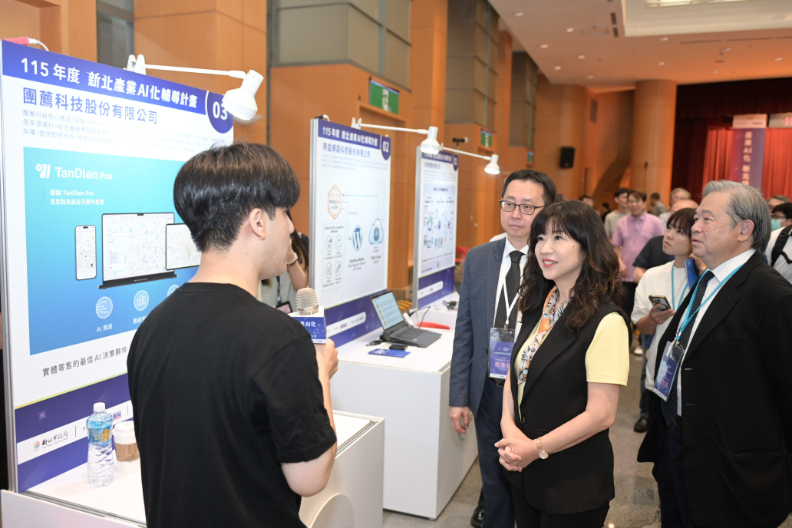
The New Taipei City Government's Department of Economic Development pioneered the New Taipei Industrial AI Transformation Program. At a networking and matchmaking event, Director-General Sheng Hsiao-jung listened firsthand to participating companies' presentations on real-world AI applications.
Cutting Documentation Time by 90% and Eliminating Errors: How AI Is Helping Yingli Turn Time into a Competitive Advantage
With more than 20 years of industry experience and as one of the first major cosmetics manufacturers to obtain Good Manufacturing Practice (GMP) certification, Yingli put its newly adopted AI tools to the test on sunscreen products, which are subject to some of the most stringent regulatory requirements and complex safety restrictions. In a short period of time, the company successfully integrated AI agent tools into its existing product development and production management workflows.
This highly challenging product testing yielded quantifiable results that exceeded expectations. Chen Junxian pointed out that the original project goal was only to shorten the documentation timeline by 50%. However, after implementation, the production time for a single report was drastically reduced from a lengthy process previously measured in weeks to within half an hour, and the formatting error rate was directly reduced to 0%. This breakthrough not only eliminated the administrative costs of repeated cross-departmental delivery, follow-up, and proofreading but also allowed professionals to focus their energy on high-value tasks such as product development and formula innovation.
"Time is a competitive advantage!" said Chao Li-hui, Chairman of Yingli Biochemical Technology. She emphasized that the cosmetics industry is highly trend-driven, and the speed of launching new products often determines a company's ability to gain a competitive edge. In the past, navigating complex regulations across different countries posed a major challenge and often slowed product launches. With the support of AI systems, Yingli can now quickly meet regulatory requirements in different markets and gain an early foothold in the global marketplace.
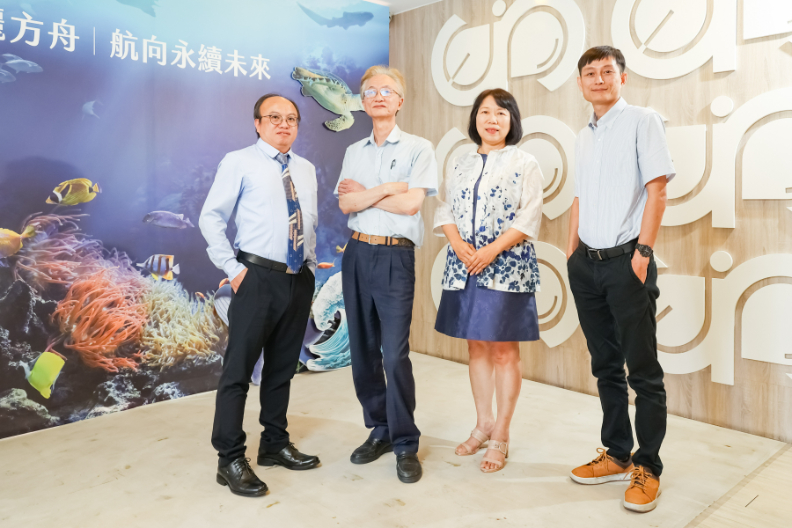
The Yingli Biochemical Technology team adopts AI tools to accelerate the preparation of Product Information Files (PIFs) for cosmetics. From left: Chen Jun-xian, R&D Manager; Hung Chao-chun, Deputy General Manager; Chao Li-hui, Chairperson; and Wang Po-hsiung, Plant Operations Manager.
From easing the customer service workload at Xuefang to helping Yingli overcome regulatory compliance challenges, the New Taipei Industrial AI Transformation Program demonstrates that successful AI adoption goes beyond technology matchmaking. It requires in-depth guidance tailored to each business's specific needs. By carefully selecting solutions and providing hands-on support from experts, the city government is helping local businesses overcome the barriers to digital transformation and make AI a core driver of day-to-day operations, building a strong competitive advantage for New Taipei's industries in an evolving marketplace.
Source:Vision Magazine