
The COVID-19 virus, which began spreading in 2020, posed a severe challenge to countries worldwide. Telemedicine, powered by cloud platforms, became a solution to alleviate healthcare strain during this extraordinary period. While the fight against the pandemic is not a prolonged period and may not necessarily become the norm for future healthcare, this experience has highlighted the crucial importance of future healthcare moving towards technological advancements and cloud-based solutions.Upgrading the management of medical-related data and information is a crucial task..
HIPAA regulations raise awareness of healthcare safety; how can we standardize electronic medical record exchange?
Lee Li-kuo, COO of Tai-Chi Cloud, pointed out that the concept of modern medicine has expanded from being hospital-centered to "people-oriented". The origin of this concept can be traced back to the Health Insurance Portability and Accountability Act (HIPAA) enacted in the United States in 1996. This act encourages medical institutions to adopt electronic health records and sets a series of security standards for medical information, thereby improving the efficiency and quality of the U.S. health insurance system.
The concept of healthcare has gradually shifted from "hospitals" to individuals. With the rise of smart healthcare, it leverages technology to provide more comprehensive medical and nursing services through cross-disciplinary and holistic care mechanisms. Among various new technologies, cloud technology is a necessary framework for realizing "people-centered, holistic care.""Especially after the amendment of the Electronic Medical Records Management Act, cloud technology will become increasingly important in the healthcare system."He said.
The amendment to the Electronic Medical Record Management Act mentioned by Li Liguo refers to the revised "Regulations for the Production and Management of Electronic Medical Records in Medical Institutions" announced by the Ministry of Health and Welfare on July 18. The main points of this amendment are twofold: first, it allows medical institutions to outsource the construction of electronic medical record systems and use public cloud services to manage electronic medical record data; second, in order to achieve the goal of paperless operation, it allows medical institutions to digitize existing written documents such as paper medical records and consent forms in accordance with electronic signature regulations.
Both of these main themes point to one thing, namely...The optimization and upgrading of medical services rely on the assistance of cloud technology..
Taiwan's smart healthcare is undergoing another upgrade, with electronic medical records playing a key role.
Taiwan started implementing electronic medical records quite early.In 2005, the CDA R2 standard launched by the international standards organization HL7 was adopted.However, the data formats supported by this standard are difficult to support on mobile devices such as mobile phones and tablets.
Hsu Chien-yeh, chairman of the Taiwan Medical Informatics Association, explained that the most mainstream international standard for medical information is FHIR, which greatly improves the convenience of medical data exchange and supports various hardware and software. Hsu emphasized that CDA R2 and FHIR each have their advantages and disadvantages, but CDA R2, being an earlier standard, requires multiple conversions to link with commonly used external information systems.
The advantages of FHIR are its openness and high interoperability, and its increasingly comprehensive international data exchange capabilities, with users expanding from hospitals to medical hardware ICT providers.For example, smartwatches with physiological signal detection functions will use FHIR which can interface with medical systems. This allows FHIR to realize the vision of "human-centered" and build medical systems from a higher perspective of health.

Image source: Design by Xu Jianye's team
During the revision of the "Regulations for the Creation and Management of Electronic Medical Records in Medical Institutions", the Ministry of Health and Welfare also promoted three major strategies to accelerate the transformation of medical IT. One of the strategies is to promote relevant systems in response to the needs of the current medical environment. The FHIR website for vaccines, which was launched last June, is one such example.
The second strategy involves internally replacing the previously used customized APIs and the EEC architecture for exchanging electronic medical records with other medical institutions with FHIR, thereby reducing communication costs. The third strategy is to gradually roll out FHIR throughout the national healthcare industry, thereby reducing the information exchange gap between different standards and improving communication efficiency.
The unique features of the FHIR architecture open up more possibilities for healthcare services. Faced with numerous technologies, Li Liguo believes that cloud platforms are the best entry point for medical institutions to build FHIR architectures. He explains that cloud platforms can not only alleviate the heavy workload of medical staff, but also provide more nuanced, comprehensive, and thorough healthcare services through the ecosystem on the platform.
Compliant with HIPAA standards! Taizhi Cloud shoulders the heavy responsibility of information implementation and sovereign compliance regulation.
Li Liguo pointed out that Taiwan AI Cloud observed the need for data upgrades in smart healthcare early on, and at that time began to provide services that comply with HIPAA standards, hosted on the Taiwan AI Cloud of the National Center for Information Technology (TWCC) of the National Applied Research Laboratories. The services include access control, advanced encryption technology, environmental management, etc. These services can meet the regulatory requirements for monitoring, auditing, etc. "Our goal is to enable hospital services to provide more comprehensive care for patients."
Taizhi Cloud, which was spun off from the national project, was given the operational responsibility of "information implementation and sovereign compliance regulation". At the same time, the company also emphasizes technological independence, including Taizhi Cloud itself and its software and hardware partners, all of which have strong R&D and technical service capabilities.
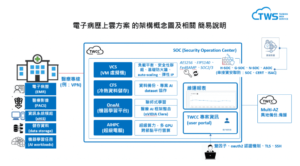
FHIR CoLAB is building a rich industrial ecosystem to meet the diverse needs of smart healthcare.
Li Liguo then pointed out the importance of the cloud ecosystem for the development of smart healthcare. Information and communication technology has a wide range of applications in the medical field, from the operation of medical institutions to clinical research and clinical trials. It involves a very deep medical expertise and a wide range of information and communication technologies. "Therefore, only by building a rich ecosystem can we meet the needs of the medical industry." FHIR CoLAB, jointly initiated by the Taiwan Medical Informatics Association, ASUS Health, and Taiwan Smart Cloud, is built on this core principle.
The Taiwan Medical Informatics Association is responsible for the application development, consulting, and education and training of the FHIR professional framework. Taiwan Smart Cloud provides data access control, advanced encryption technology, and environmental management service resources that comply with HIPAA standards. ASUS Health serves as the integrated strategic consultant and provides comprehensive services.
FHIR CoLAB is a co-creation platform that will bring together professional manufacturers, academic research institutions, and government departments from different levels, collaborating with multiple medical institutions to "allow manufacturers interested in investing in smart healthcare to find technical resources, policy guidance, and testing grounds here." Hsu Chien-yeh pointed out that the realistic simulation environment provided by FHIR CoLAB allows manufacturers to smoothly promote POS (Proof of Service) verification and accelerate the implementation of system operation models.
Taizhi Cloud's five key features comprehensively assist the digital transformation of the healthcare industry!
Li Liguo further analyzed that Taizhi Cloud can bring five major advantages to the cloud platforms of ICT operators and medical institutions: compliance, IaaS hardware resources, cybersecurity reporting, digital applications, and AI expertise.
First, there is compliance. Taiwan AI Cloud uses the TWCC Taiwan AI Cloud of the National Center for Information Industry of the National Applied Research Laboratories as its main commercial service platform, which complies with relevant government regulations. "This move can reduce the trouble for manufacturers and avoid the huge compliance costs that arise in the later stages of product development."
Secondly, there are the IaaS hardware resources. The construction of the AI supercomputer at the State Research Institute of Technology and the State Grid Corporation of China is of national strategic significance. Therefore, its virtual machine containers, computing power, and storage capacity are all top-level IaaS public cloud specifications, which can provide the most powerful hardware support.
Thirdly, there's the issue of cybersecurity reporting. Because medical procedures and data constitute highly personal and sensitive information, the healthcare industry places great importance on cybersecurity and has long established a comprehensive cybersecurity reporting mechanism. Taizhi Cloud and DataLink Cybersecurity have established a cybersecurity information integration mechanism, eliminating the need for separate bridging by healthcare institutions.
Fourth is digital applications. Currently, the vast majority of smart applications are built on the cloud. For example, telemedicine, which was common during the Covid-19 pandemic, is one such application. Whether it is a B2B, B2C, or B2B2C operating model, Taizhi Cloud has provided corresponding digital services.
Fifth is its AI expertise. Since its inception, Taizhi Cloud has focused on AIHPC services, and the volume of medical data is often staggering.The powerful computing power and algorithms provided by Taizhiyun can significantly shorten data processing time and accelerate product time-to-market..
Cross-domain matchmaking brings together the strengths of multiple parties, making it easy to take the first step in transformation.
While the five advantages mentioned above can maximize the effectiveness of businesses' limited resources, some companies lack sufficient understanding of AI and cloud computing and are unsure how to take the first step. In response, Li Liguo suggests: "The FHIR CoLAB co-creation platform has a complete ecosystem, which partners can use to clarify the positioning of their applications, products, and technologies, and quickly find suitable partners to jointly develop a comprehensive solution."
Furthermore, Taiwan Smart Cloud will leverage its professional experience to collaborate with partners in evaluating projects and will provide free resources as needed to ensure projects take shape smoothly. Li Liguo concluded by pointing out that AIHPC's rich industry ecosystem is a crucial support for the development of smart healthcare, and FHIR CoLAB's cross-domain services and consulting, bringing together multiple partners, will become a strong backing for Taiwan in this field! "FHIR CoLAB has been providing related services since July. Medical and industry partners can make good use of this resource to create application services and implementation models that meet medical information needs, seizing the opportunity for smart healthcare development."
- FHIR CoLAB brings together healthcare professionals, technology vendors, and cloud computing resources to help partners co-create and promote the development of FHIR applications. Learn more about FHIR CoLAB resources:https://fhir.com.tw/
- Learn more about Taizhi Cloud's electronic medical record cloud service:https://tws.twcc.ai/by-theme/EMR-could-service/
- The "2022 FHIR Practice and Application Online Forum" will assist medical institutions and related organizations in implementing FHIR applications. Register now:https://forms.gle/8ConUmJ6d6b62sbM7
Source:Science and Technology Daily