

Taiwan AI Cloud announced the launch of its 5G AI Ready Platform and co-creation lab, integrating the technological advantages and service capabilities of ASUS, Taiwan Mobile, and Intel to jointly accelerate the implementation of 5G application scenarios.
Startups play a crucial role in the development of 5G applications in Taiwan. The high bandwidth and low latency of 5G are like a highway for data transmission, allowing for more diverse applications of technologies such as IoT and AI. As a result, in recent years, both the government and the private sector in Taiwan have invested resources to encourage startups to develop innovative applications based on 5G.
However, startups often encounter several major challenges in developing innovative 5G applications. First, there is a lack of 5G environments for testing and verification. Second, significant time is required for cloud-network integration. Third, there is a lack of on-site demonstrations of application scenarios, preventing companies from experiencing the true nature of 5G applications. To address these challenges, Taizhi Cloud recently launched its 5G AI Ready Platform system and co-creation lab to assist startups in overcoming these difficulties.
The 5G AI Ready Platform is the first cloud-network integrated platform in Taiwan, created through cross-domain collaboration between Taizhiyun, ASUS, Taiwan Mobile, and Intel. By pre-integrating the AI development tools and hardware environment required for 5G applications, it allows startups to quickly verify the performance and service quality of various business applications, providing customers with a ready-to-use 5G AI application solution. Through the 5G AI co-creation lab located in the ASUS AI Cloud Innovation Park, application scenarios are demonstrated, allowing target customers or the market to experience the performance of 5G AI applications firsthand.
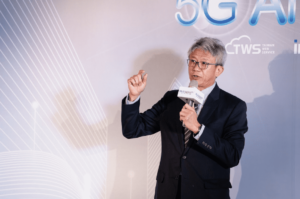
ASUS Chief Operating Officer and Chairman of Taizhiyun, Hsieh Ming-chieh
Overcoming the challenges of environment setup and hardware/software integration through the 5G AI Ready Platform.
At the launch ceremony of the 5G AI Ready Platform and Co-creation Lab, ASUS COO and Taizhiyun Chairman Hsieh Ming-chieh pointed out that the 5G AI Ready Platform and Co-creation Lab provides optimal computing power and a complete 5G environment, which can help startup teams overcome integration challenges in 5G application development.
Wang Baoqing, Vice President of Enterprise Services at Taiwan Mobile, also believes that the establishment of the 5G AI Ready Platform and Co-creation Lab can bring leapfrog growth to startup partners.
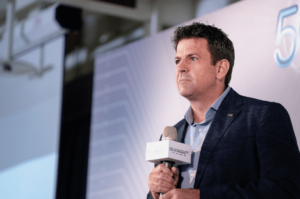
Steve Long, General Manager of Intel Asia Pacific and Japan
Steve Long, General Manager of Intel Asia Pacific and Japan, stated that the 5G AI Ready Platform and Co-creation Lab accelerates computer vision workloads through Intel® OpenVINO™. With an open, consistent, and cross-architecture oneAPI programming model, developers can design programs that can run on the most suitable CPUs, GPUs, FPGAs, and other accelerators, accelerating and optimizing workloads. This allows startups and independent software vendors (ISVs) to easily develop, validate, and deploy software.
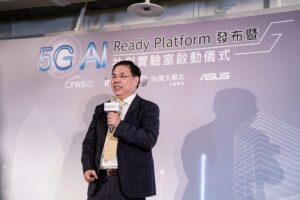
Chen Zhongcheng, Associate President of ASUS Computer and Chief Technology Officer of Taizhiyun
ASUS Associate President and Chief Technology Officer of Taiwan Intelligent Cloud, Chen Chung-cheng, further explained the architecture of the 5G AI Ready Platform. At the underlying level, Taiwan University's 5G services are integrated to stably execute 5G AI applications; Intel's Intel® oneAPI and OpenVINO™ development tools optimize hardware performance and improve the execution efficiency of AI applications; ASUS's IoT, Server, and Enterprise Solutions division assists in building edge clouds or servers to meet the computing needs of 5G AI applications; NetApp's high-speed storage system is particularly helpful for applications requiring high-speed IOPS, such as VR and digital twins, making the 5G metaverse possible; furthermore, if the computing power of the edge cloud is insufficient, public cloud resources can be flexibly integrated to expand computing power.
OneAI, the one-stop machine learning development collaboration platform of Taizhi Cloud, plays a bridging role, connecting the hardware resources of 5G AI applications at the bottom and supporting workloads such as AI, AR, and VR at the top, so as to achieve the goal of quickly building, deploying and managing AI models.
Because the 5G AI Ready Platform has already integrated 5G, Cloud, IoT, AI, VR, AR and related infrastructure, startups can use the 5G AI Ready Platform as the core to develop, verify and deploy on the platform, reducing development time and costs, and turning ideas into enterprise applications that combine key 5G and AI technologies.
5G AI applications spanning various vertical industries
On the day of the launch ceremony, the 5G AI Co-creation Lab also showcased vertical applications based on the 5G AI Ready Platform, developed in collaboration with many co-creation partners. These included: AR smart glasses for smart inspection, digital twin AI detection system, AMR autonomous mobile robot, AI image analysis platform, 5G virtual reality, 5G drone inspection, 5G smart city image big data application platform, and 5G VR medical imaging applications.
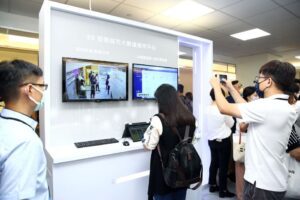
The 5G AI Co-creation Lab showcases a 5G smart city image big data application platform.
Among them, the 5G smart city image big data application platform, built with ASUS Cloud Architecture Software Center, can collect image data from drones, IP cameras, etc., and upload it to the platform in real time via 5G. It can then perform AI calculations such as traffic flow, tourist attraction flow, and identification of masks and social distancing in public places, serving as an important reference for urban governance.
Taizhi Cloud's 5G virtual reality application, built using a private 5G network, streams XR content from the OpenVR application to the user's XR wearable device via the 5G network. Users don't need computers, graphics cards, or other equipment; they can enjoy a deeply immersive VR experience through VR headsets, VR glasses, and other wearable devices. Because 5G virtual reality utilizes the 5G Edge network architecture of TWS, data is brought closer to the user, reducing bandwidth requirements and thus optimizing the user's VR experience.
Furthermore, the 5G AI Co-creation Lab has developed a wide range of applications in 5G smart manufacturing, helping manufacturers improve production efficiency and quality. For example, the digital twin AI inspection system jointly developed by Pegatron, Epson, and G-Tech uses cameras to automatically detect product yield and controls robotic arms to pick up products. Based on the AI inspection results, products are categorized and placed in OK or NG areas. The entire process achieves synchronous operation of the digital twin, facilitating monitoring and remote control. With the implementation of 5G, latency-critical tasks can run on the 5G edge cloud, while the retraining of AI models requiring higher computing power can run on the TWS public cloud. This simultaneously meets the factory's real-time needs and enjoys the convenience of the public cloud, making it easier for enterprises to achieve collaborative unmanned smart factories.
Beyond its digital twin AI inspection system, ASUS's AR smart glasses inspection digitizes equipment inspection operations and simultaneously creates a digital command center. Operationally, on-site personnel wear AR glasses, which connect to the backend AI central monitoring system via 5G transmission. The status of the on-site equipment is projected onto the AR glasses, allowing personnel to simultaneously see the machines with both eyes, freeing their hands and ensuring every action is executed correctly. This avoids potential human error and difficulty in verification associated with traditional operations. Alternatively, by scanning QR codes at different locations in the factory using the AR glasses, real-time information such as production line dashboards can be displayed, allowing on-site production managers to monitor production efficiency and progress at any time without having to travel back and forth across a large factory area, effectively functioning as a mobile command center!
Beseye, a cloud-based security monitoring system, uses human skeleton analysis to detect whether the work actions of production line personnel comply with regulations. This digitizes previously difficult-to-quantify personnel processing behaviors, improving production line management efficiency and quality. Furthermore, human skeleton analysis can automatically detect abnormal movements and behaviors of people in a large number of security camera images, ensuring the safety of the area and personnel without the need for human monitoring.
Former NCC Commissioner Professor Sun Ya-li believes that the greatest value of 5G lies in accelerating the digital transformation of enterprises. The NCC passed the draft "Regulations Governing the Establishment and Use of Dedicated Mobile Broadband Telecommunications Networks" in July 2022 in order to meet the needs of enterprises that want to build 5G private networks, thereby promoting the vigorous development of 5G use in Taiwan. The Taiwan Cloud 5G AI Ready Platform and Co-creation Lab is not only open to startups, but also to enterprises, ISVs and application developers. It hopes to help all parties accelerate the development of 5G applications and meet the needs as demand takes off. At the same time, it will continue to integrate the resources and strengths of partners in different fields, and accelerate the application development of 5G, AI and metaverse in a collective manner, creating a win-win situation for terminal fields, application partners and 5G communication equipment partners.
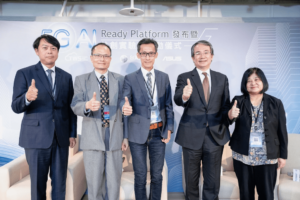
Guests in order of appearance (from left to right): Wu Hanzhang, General Manager of ASUS Cloud and Taiwan Smart Cloud; Zheng Zhicheng, Director of Commercial Business at Intel Taiwan; Wang Baoqing, Vice President of Taiwan Mobile; Jin Qingbo, Chief Security Officer and General Manager of Server Business Unit at ASUS; Sun Yali, former member of the National Communications Commission.
Source:Digital Age