Trend View

Taizhi Cloud and Pegatron O-RAN form an alliance to provide 5G private network cloud services.

Taiwan Abrahams announced a partnership with Pegatron to integrate Pegatron's O-RAN open architecture base station solution into its 5G AI Ready Platform mobile edge cloud platform and AIHPC public cloud. The first phase will launch a one-stop 5G private network cloud service in Taiwan, integrating 5G ORAN private network, hybrid cloud, high-speed edge computing cloud, and AIHPC supercomputer. Furthermore, Taiwan Abrahams signed a global strategic partnership MOU with Pegatron, targeting vertical application areas such as smart manufacturing, smart cities, smart healthcare, smart transportation, cultural innovation, and education and entertainment, thus entering the global 5G cloud service market.

Taizhi Cloud and Pegatron O-RAN form an alliance to provide 5G private network cloud services. 閱讀全文 »

Wu Hanzhang: Vision for the Development of the Medical Information Industry

This article discusses the current status and challenges of digital healthcare development in Taiwan and offers suggestions. Taiwan's healthcare information industry is relatively small, with large hospitals mostly developing their own healthcare information systems. The technology of these existing systems is gradually falling behind cloud-based software architectures. Furthermore, the percentage of software talent invested in healthcare information over the past decade has been very low, hindering the realization of the digital healthcare aspirations of the nation. However, the Ministry of Health and Welfare began planning a next-generation healthcare information system last year, with a planned large budget to address the outdated architecture of Taiwan's current healthcare information systems. The author proposes that this is an opportune time to restructure Taiwan's healthcare information industry, encouraging large hospitals to gradually shift towards purchasing high-quality products and actively fostering large, internationally-capable flagship healthcare information companies that can provide reliable and highly scalable healthcare information solutions, possess integrated comprehensive patient data, interface with international data standards, export to overseas markets, and establish an application ecosystem. Ultimately, Taiwan's healthcare information infrastructure can connect with the international market, potentially attracting top-tier digital software talent to continue investing in the field.

Wu Hanzhang: Vision for the Development of the Medical Information Industry 閱讀全文 »

Wu Hanzhang: Large Language Models Open New Horizons in Medical AI

ChatGPT is a chatbot service based on the GPT-3 language model. It can understand multiple languages, including Chinese, and provide unexpected responses, sparking interest in artificial intelligence. This type of chatbot can be applied not only to personal healthcare assistants but also to emerging medical services such as telemedicine, giving healthcare institutions the opportunity to provide more realistic care services.

Wu Hanzhang: Large Language Models Open New Horizons in Medical AI 閱讀全文 »

ChatGPT drives the AIGC trend, overcoming development barriers—Taizhi Cloud launches AI 2.0 consulting services.

Since ChatGPT opened its free trial to users in late November 2022, it has quickly become a hit. Its ability to generate text, essays, jokes, poems, and even code based on user input, coupled with an intuitive user experience that feels like interacting with a normal human, has sparked a surge in popularity. According to research by UBS Group, ChatGPT reached 100 million active users by January 2023, making it the fastest-growing consumer application in history.

ChatGPT drives the AIGC trend, overcoming development barriers—Taizhi Cloud launches AI 2.0 consulting services. 閱讀全文 »

Taizhi Cloud launches a one-stop AI 2.0 high-computing-power consulting service, becoming the best partner for enterprises launching large-scale language model projects.

In recent years, artificial intelligence (AI) has made significant progress in natural language processing (NLP), and the recent ChatGPT trend has demonstrated the power of large language models (LLMs). ChatGPT uses a language model with as many as 175 billion parameters, requiring a large number of GPU cards for high-speed parallel computing, which is difficult for most companies to have such an environment and capability.

Taizhi Cloud launches a one-stop AI 2.0 high-computing-power consulting service, becoming the best partner for enterprises launching large-scale language model projects. 閱讀全文 »

Wu Hanzhang: The era of precision health for all is coming.

At the opening of the Executive Yuan Biotechnology Industry Strategy Advisory Committee (BTC) meeting in September this year, the vision of precision health for all ages by 2030 was announced, successfully focusing on Taiwan's BIO + ICT development goals.
Realizing the vision of precision health requires three key technologies: gene sequencing, data analysis, and big data. In data analysis, AI supercomputers can reduce computational demands from days to less than an hour. Taiwan's National Health Research Institutes (NHRI), through its BIO research, unveiled the NHR-1 biomedical AI supercomputer earlier this year. Combined with existing abundant gene sequencing research capabilities, the subsequent research results are highly anticipated.

Wu Hanzhang: The era of precision health for all is coming. 閱讀全文 »

Wu Hanzhang: Ushering in a New Chapter in Telemedicine

The Taiwanese government has recently been pushing hard to pass the "Regulations Governing Telemedicine and Treatment," which will have a significant impact on the promotion of smart healthcare after the pandemic. The legislative direction can be seen in four main directions: opening up more applicable scenarios, more implementation items, allowing prescriptions to be issued remotely, and simplifying the administrative procedures for applying for telemedicine.
Based on the "Measures for Telemedicine Diagnosis and Treatment" and the "Measures for the Production and Management of Electronic Medical Records in Medical Institutions," it can be seen that the government intends to expand telemedicine to long-term care, home care, and international medical care. In the future, telemedicine will become the new norm in the post-pandemic era.

Wu Hanzhang: Ushering in a New Chapter in Telemedicine 閱讀全文 »

Wu Hanzhang: Utilizing speech processing technology to create high-quality care

Natural language processing (NLP) technology has become quite popular in recent years, with its most common application being Siri on smartphones. Applying this technology to healthcare and long-term care could address the challenges faced by the elderly in operating digital devices and experiencing declining communication skills, thereby improving the quality and efficiency of healthcare.

Wu Hanzhang: Utilizing speech processing technology to create high-quality care 閱讀全文 »

Wu Hanzhang: Building a Digital Community Care Network

The recent outbreak of the pandemic has brought the issue of healthcare capacity to the forefront. The use of digital technology to assist home and community care has been piloted for years, and with the outbreak of the pandemic, the pilot concept has been gradually expanded. However, during implementation, many systemic and regulatory issues have been identified that need to be addressed. The severity of the pandemic has accelerated this transformation, with governments, medical institutions, and technology companies working together more closely. Governments are actively relaxing regulations on telemedicine, and technology companies are seizing the opportunity to collaborate with hospitals through SaaS (Software as a Service) cloud services, home medical devices, and artificial intelligence technologies to solve problems. In the future, we will see new healthcare service models emerge in our lives.

Wu Hanzhang: Building a Digital Community Care Network 閱讀全文 »

Wu Hanzhang: Hospitals going to the cloud creates a win-win situation

The Regulations for the Creation and Management of Electronic Medical Records in Medical Institutions, set to take effect in April 2020, will allow medical institutions to utilize cloud services to process hospital electronic medical record data, establishing relevant principles and key areas for supervision and management. This policy will accelerate the integration of the healthcare and ICT industries, creating a win-win situation for medical institutions, the public, the government, and the ICT industry.

Wu Hanzhang: Hospitals going to the cloud creates a win-win situation 閱讀全文 »

Wu Hanzhang: AI supercomputers are a perfect partner for the health industry

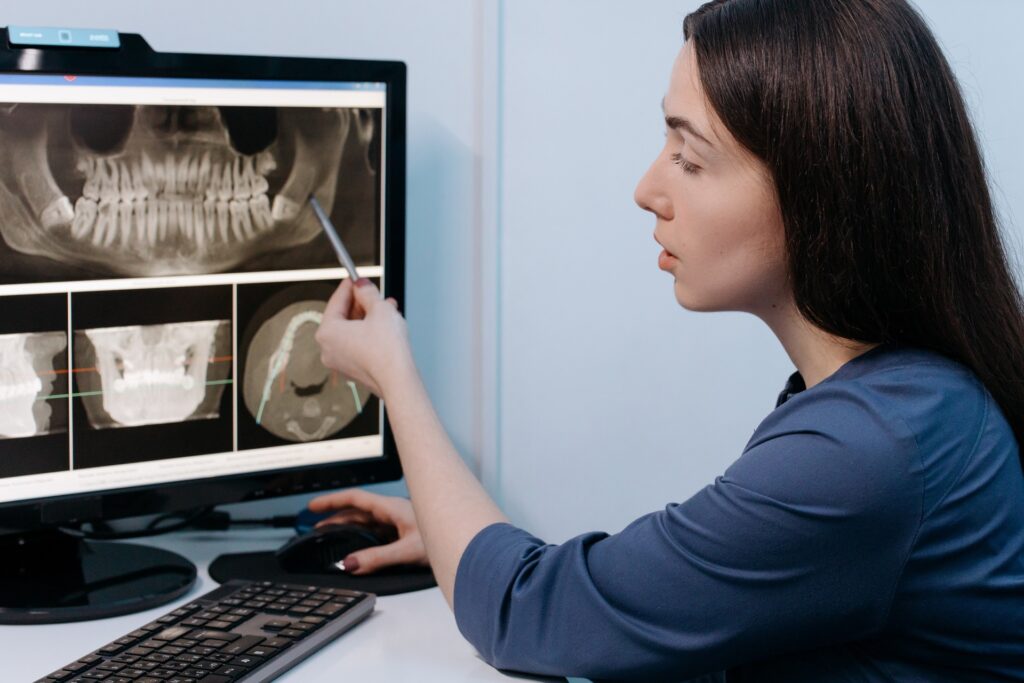
In the development of AI for medical imaging, tens of thousands of high-quality images often need to be processed, requiring sufficiently fast computer systems. The COVID-19 pandemic has brought a golden opportunity for Taiwan to develop its precision health industry. It is believed that by integrating Taiwan's three major advantages—medical, ICT, and health big data—and leveraging the Taiwan Sugi-2 AI supercomputer to accelerate innovation and research, it will surely bring more national benefits to Taiwan.

Wu Hanzhang: AI supercomputers are a perfect partner for the health industry 閱讀全文 »

EDM Subscription

EDM Subscription

On-Demand AI Cloud Consulting

Sales Contact
Sales Contact Form