
Do you also enjoy shopping online through social media? Chatting, watching live shopping sprees, tapping your phone, participating in interactive comments and information filling, and participating in live shopping sprees—behind these seemingly easy, simple, and quick social media shopping behaviors, have you ever thought about how this series of processes and mechanisms actually change and operate?
The changing landscape of technology and consumption patterns has driven global businesses to actively invest in digital innovation and expand new sales channels. iKala, a multinational AI company, is leveraging the TWCC Taiwan AI Cloud to accelerate AI model development. It is actively targeting direct-to-consumer (D2C) businesses and brands with AI modules for the new retail industry, assisting brands and merchants in Taiwan and Southeast Asia to achieve faster real-time data feedback, real-time AI optimization, real-time audience selection, and real-time channel adjustments. By utilizing real-time data insights, real-time feedback, real-time decision-making, and real-time adjustments, iKala aims to seize new retail opportunities.
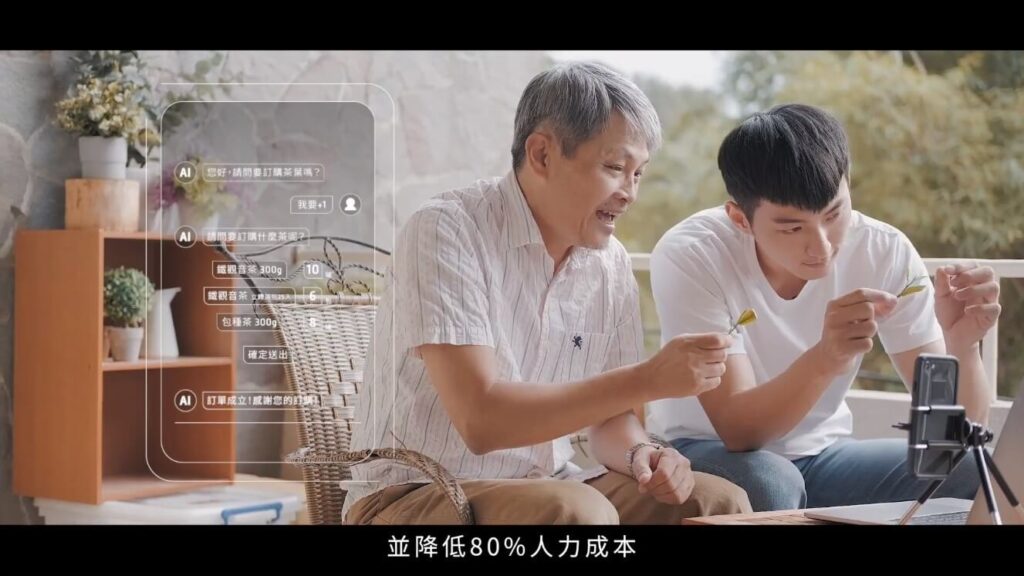
When businesses conduct live-streaming sales, iKala AI Community Business Sales Tool utilizes AI semantic detection technology and intelligent business robots to accurately identify buyers and process a large number of orders while the live stream is running. On average, it helps clients increase sales by 20% and reduce labor costs by 80%, saving sellers not only time but also preserving the beauty of local innovation.
Meanwhile, the powerful GPU computing resources of TWCC (Taiwan AI Cloud) at the National Center for Information Technology and Communication Engineering (NCITC) have enabled iKala's AI technology team to process over 100 million social media data points on a large scale, while also rapidly performing data analysis. This has accelerated the training speed of language models by 8 times and increased the model iteration speed in computer vision-related technology development processes, such as object detection and semantic segmentation, by approximately 10 times. This has enabled them to achieve high accuracy optimization and high training efficiency in a short period of time, and more quickly help enterprises enhance business value and explore new retail opportunities through data insights.
Driven by the COVID-19 pandemic in 2020, the development of the contactless economy has led global consumers to demand more personalized and seamless immersive consumption experiences, thereby boosting the growth momentum of social commerce and the online-offline (OMO) trend of new retail. Whether now or in the future, smart social commerce plays a crucial role, bringing a warm and engaging shopping experience to the consumer process. It effectively integrates and complements AI technology with human processes, leveraging AI technologies such as live video recognition, automatic labeling, and social commerce sentiment analysis to help brands and merchants implement smart and precise marketing and sales. These technologies facilitate real-time data feedback, AI-driven optimization, real-time audience selection, and real-time channel adjustments. Simultaneously, it can eliminate barriers such as local market, cultural, and linguistic barriers that merchants may encounter when entering new markets. This allows businesses, brands, and SMEs to focus more on product innovation, more easily and quickly expand new business opportunities, and showcase the innovative strength of Taiwanese brands to the world.
